If your workday is centered on the Eastside but you want a more urban home base for certain seasons of life, Seattle offers a compelling second option. You may be looking for a lock-and-leave condo near dining and events, a townhome with a bit more privacy, or a waterfront property with a stronger sense of place. This guide breaks down how Seattle waterfront homes, townhomes, and high-rise condos compare for Eastside executives, with current market context, commuting realities, and ownership considerations to help you make a confident decision. Let’s dive in.
Why Seattle appeals to Eastside executives
For many Eastside buyers, Seattle works best as an urban complement rather than a direct substitute. It gives you access to a denser, more walkable lifestyle while keeping Bellevue, Mercer Island, Redmond, and other Eastside job centers within reach.
Seattle’s waterfront has also become easier to enjoy on foot. The city’s Overlook Walk and Park Promenade improvements add public open space and stronger pedestrian connections between Pike Place Market, the aquarium, Colman Dock, and surrounding downtown areas.
Daily convenience is a major part of the appeal. Downtown Seattle has a Walk Score of 98, which supports a lifestyle with less reliance on a car for meals, errands, and entertainment.
Seattle also delivers two of the region’s strongest cultural anchors. Pike Place Market operates 363 days a year and includes hundreds of small businesses, while Seattle Center serves as a major civic and arts hub with more than 30 partner organizations.
Compare Seattle housing options
These properties are not just different price points. They are different ownership models, each with a distinct day-to-day experience.
Waterfront homes
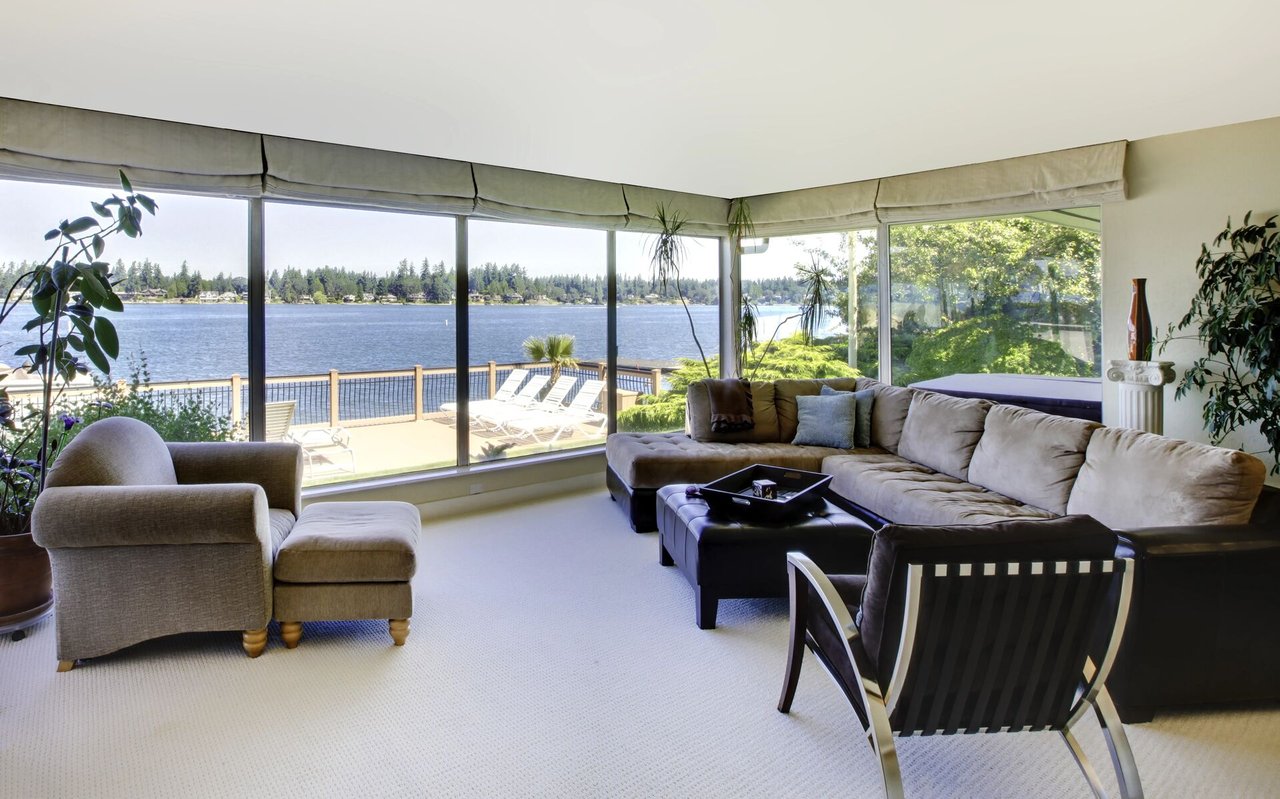
Waterfront homes offer the most site-specific lifestyle of the three. If you value direct water orientation, view potential, and a more private residential setting, this category can feel very different from downtown living.
Seattle’s current waterfront snapshot shows 74 waterfront homes for sale with a median listing price of $780K. That broad number reflects a range of locations and property types, so individual pricing can vary significantly based on shoreline position, views, condition, and land characteristics.
The tradeoff is complexity. Waterfront ownership often requires more due diligence because Seattle’s Shoreline Master Program can affect permits, development, and property-specific improvements in shoreline areas.
Insurance is another key consideration. According to the Washington Office of the Insurance Commissioner, standard homeowner policies usually do not cover flood damage, and earthquake coverage is also separate or added by endorsement.
Urban townhomes
Townhomes often sit in the middle ground between a detached home and a tower condo. You get a more house-like layout, and in many cases, more separation from neighbors than you would in a high-rise setting.
Seattle currently has 424 townhouses for sale at a median listing price of $789K. For many Eastside executives, that makes townhomes worth considering when you want an urban base with more private-entry living and less of the vertical lifestyle that comes with a large condo building.
This option can be especially appealing if you split time between the city and the Eastside but still want a residence that feels more grounded. In practical terms, townhomes often balance city access with a more familiar ownership format.
Downtown high-rise condos
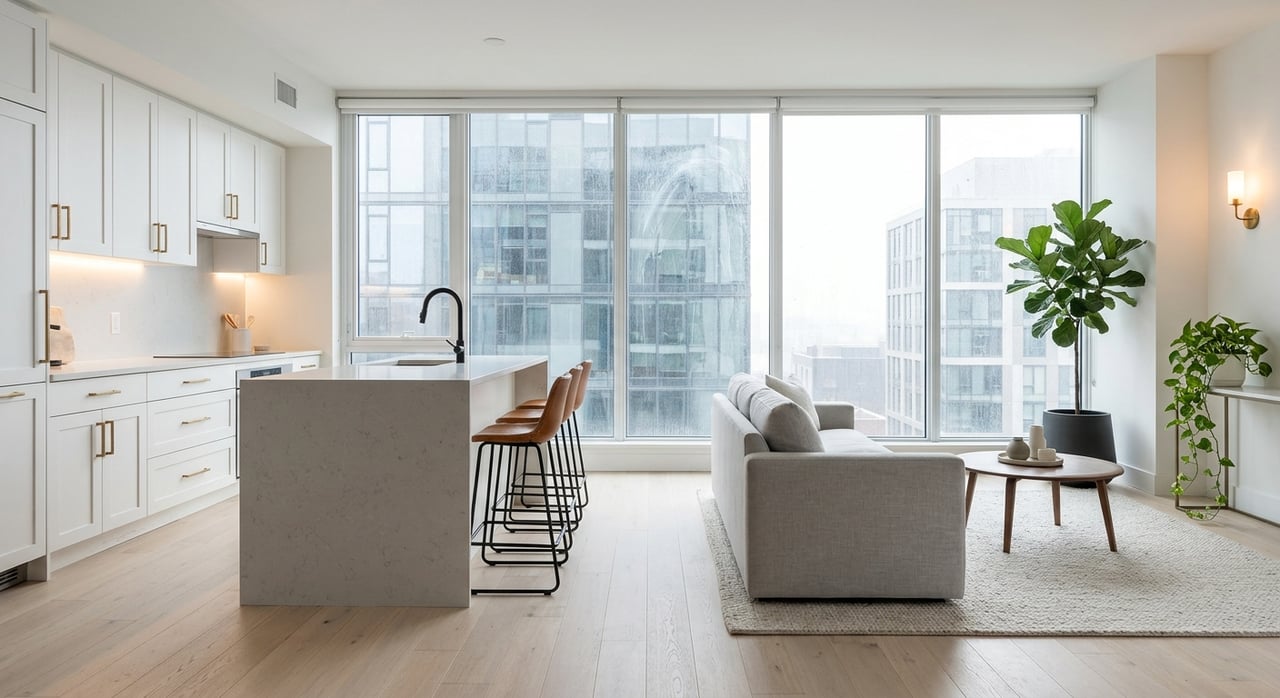
If your top priorities are convenience, walkability, and low exterior maintenance, downtown high-rise condos are usually the clearest fit. They can work well as a pied-à-terre, a simplified primary residence, or a flexible in-city base.
Seattle currently has 786 condos for sale at a median listing price of $517K. Within Downtown Seattle specifically, there are 310 condos for sale with a median listing price of $600K, and that same market page reported a median sale price of $570K in February 2026.
For an Eastside executive, the biggest benefit is often ease. A high-rise can make it simpler to live close to restaurants, arts venues, waterfront improvements, and transit, while limiting the exterior maintenance responsibilities that come with detached housing.
How commuting to the Eastside works now
Commuting matters if you plan to use Seattle as a primary residence or weekday base. Today, your options are broader than they were just a few years ago.
As of March 28, 2026, Sound Transit’s Crosslake Connection completed the 2 Line across Lake Washington. Sound Transit says the full 2 Line now runs between Lynnwood and Redmond, with a connection to the 1 Line at International District/Chinatown Station.
Bus service remains relevant too. ST Express Route 550 continues to provide direct Bellevue-Seattle service with stops that include Bellevue Downtown Station, South Bellevue Station, Mercer Island, International District/Chinatown, and Westlake.
If you drive, SR 520 remains a direct corridor between Seattle and Bellevue, though toll rates vary by time of day. I-90 is also a major route, but corridor conditions and construction activity can affect trip times.
The practical takeaway is simple: commute convenience is now less about absolute distance and more about how you prefer to travel. Some buyers want rail access, some want a direct bus option, and others prioritize quick access to 520 or I-90.
Understand the price ladder
For many Eastside buyers, Seattle can represent a different entry point into an urban lifestyle. The citywide numbers help explain why.
Seattle’s overall median sale price across all home types is about $850K, while Bellevue’s median sale price is $1.575M. Within Seattle, current median listing prices are $517K for citywide condos, $600K for Downtown Seattle condos, $789K for townhomes, and $780K for waterfront search results.
That does not mean Seattle is automatically the less expensive choice for every buyer. View orientation, building quality, dues, location, and renovation level can all change the real comparison.
Still, the broader pattern is useful. If you want an urban residence to complement an Eastside lifestyle, Seattle may offer more flexibility across price points and ownership formats.
Review ownership and due diligence carefully
Once you narrow your preferred lifestyle, the next step is understanding the ownership structure behind it. This is where many smart buyers gain clarity.
Condo reserve studies matter
In Washington, condominium associations are required by law to prepare and update reserve studies annually, with a visual site inspection at least every three years. Under RCW 64.34.380, if an association does not have a reserve study, that must be disclosed in the resale certificate or public offering statement.
For you as a buyer, reserve studies help reveal whether a building appears financially prepared for major repairs and replacements. In a high-rise purchase, this can be just as important as finishes, views, or amenities.
Condo insurance is layered
Condo insurance is not always straightforward. The Washington Office of the Insurance Commissioner notes that claims can involve both your HO-6 policy and the association’s master policy.
That means you should understand exactly what the master policy covers before closing. The key questions are often about walls-in coverage, improvements, deductibles, and loss assessment exposure.
Waterfront due diligence is more location-specific
Waterfront ownership often involves a more customized review. Along with standard title, inspection, and insurance questions, buyers may need to look more closely at shoreline rules, flood considerations, and maintenance sensitivity tied to the site itself.
This is one reason a waterfront purchase should be evaluated differently from a downtown condo or a townhome. The appeal can be exceptional, but the review process usually needs to be more detailed.
Which Seattle option fits your goals?
The right choice depends on how you plan to use the property, not just what style you prefer in photos. Start with your actual routine.
If you want maximum convenience and a true lock-and-leave setup, a downtown high-rise condo is often the strongest match. If you want a bit more privacy and a more house-like layout, a townhome may offer the better balance.
If your priority is a stronger connection to the water, views, and a more distinctive residential setting, a waterfront property may be worth the added diligence. In each case, the best decision comes from matching lifestyle goals with commute preferences, ownership structure, and financial comfort.
A thoughtful search can also uncover opportunities beyond the most visible inventory. With a market-backed approach, curated access, and careful review of building or property fundamentals, you can choose a Seattle residence that supports both your work rhythm and your long-term lifestyle.
If you are weighing Seattle waterfront, townhome, or high-rise options alongside Eastside priorities, Diane Tien offers strategic, research-driven guidance with a boutique, high-touch approach. Whether you need a lock-and-leave city residence, a relocation plan, or curated access to select Seattle opportunities, she can help you evaluate the tradeoffs clearly and move with confidence.
FAQs
What makes Downtown Seattle attractive for Eastside executives?
- Downtown Seattle offers strong walkability, access to dining and cultural destinations, and practical transit connections to the Eastside, including the 2 Line and Route 550.
How do Seattle high-rise condos compare with townhomes?
- High-rise condos usually offer more lock-and-leave convenience and less exterior maintenance, while townhomes often provide a more house-like layout and private-entry living.
What should you review before buying a Seattle condo?
- You should review the association’s reserve study, financial condition, resale certificate, HOA structure, and how the building’s master insurance policy interacts with your own HO-6 coverage.
What is different about buying a Seattle waterfront home?
- Waterfront homes often require closer review of shoreline regulations, flood insurance needs, earthquake coverage options, and property-specific maintenance considerations.
How can you commute from Seattle to Bellevue now?
- Current options include the 2 Line connection across Lake Washington, ST Express Route 550, SR 520, and I-90, with the best fit depending on your preferred travel mode and timing.