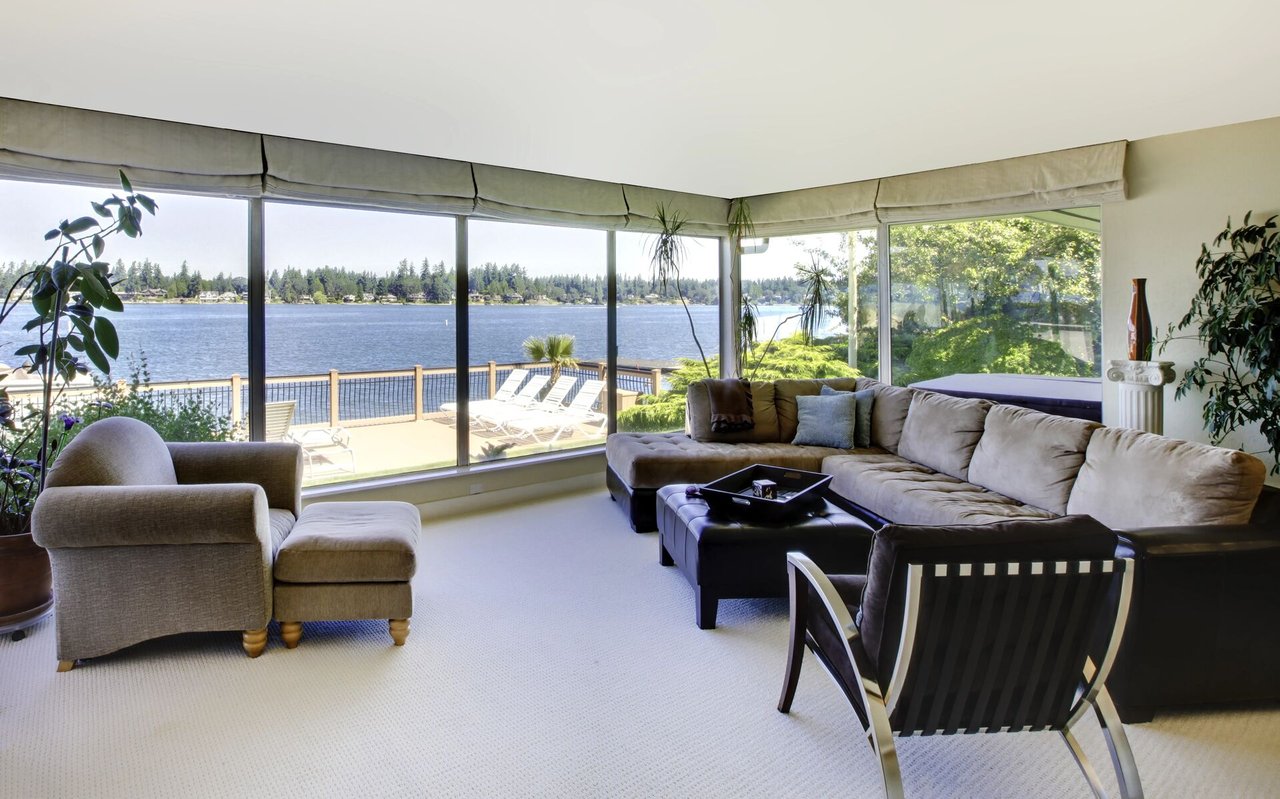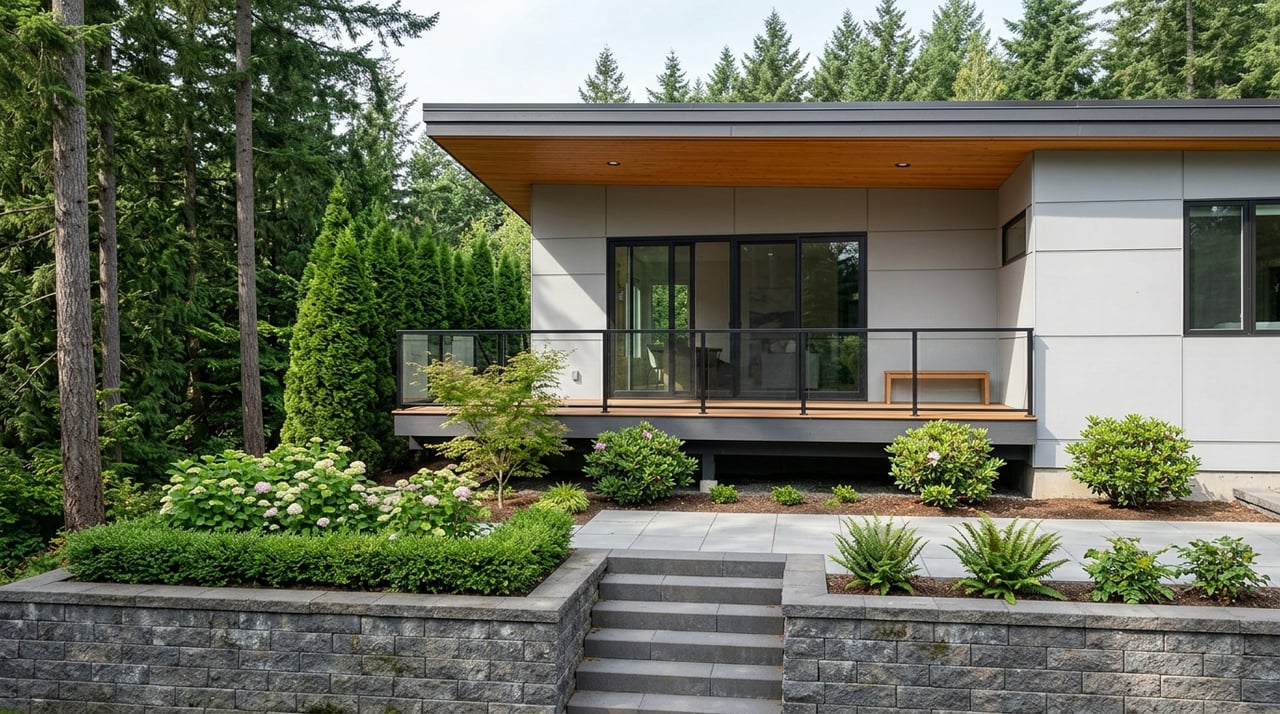
Wondering why one Sammamish home has a sweeping lake outlook while another just a few streets away feels tucked into the trees? In Sammamish, views and lot types are closely tied to the land itself, and that can shape everything from privacy and outdoor space to long-term value. If you are buying or selling here, understanding how topography, zoning, and site constraints work together can help you make a smarter decision. Let’s dive in.
Why Sammamish Views Stand Out
Sammamish sits on the East Sammamish Plateau in east King County, next to the eastern shore of Lake Sammamish. The city describes the area as hilly, with flat, rolling, and steep sections, plus steep slopes along the western edge and creek ravines that can reach about a 55% grade. That varied terrain is a big reason view homes tend to appear on higher ground, sloped sites, and near the lake edge.
This setting also creates a wide range of view experiences. Some homes look out over Lake Sammamish, some capture mountain outlooks, and others offer territorial views across trees, rooftops, valleys, or ridgelines. Even within the same area, the quality and durability of a view can change a lot from one parcel to the next.
Lake Sammamish also adds to buyer interest because it is a major local amenity, not just a scenic backdrop. King County reports that more than a million people use the lake each year for recreation, and the East Lake Sammamish Trail runs along the east side as a multi-use corridor. That helps explain why homes with a lake orientation often draw strong attention, even when they are not waterfront.
How King County Recognizes Views
In the South Sammamish Plateau market area, King County treats view as a real valuation feature. The county’s assessor materials list separate adjustment ranges for Lake Sammamish views, mountain views, and territorial views, with lake views receiving the highest adjustments, followed by mountain and then territorial views. The county’s 2024 annual update also continued using view-related variables in its valuation model.
That does not mean every view carries the same premium. A broad and visible sightline from main living spaces is usually more meaningful than a narrow glimpse from one upstairs room. In practice, quality, permanence, and usability matter just as much as the simple label of “view home.”
Lake Views
Lake views are typically the strongest premium category in Sammamish because they combine scenery, recreation, and scarcity. In King County’s 2021 South Plateau model, Lake Sammamish views were assigned adjustments of 30%, 25%, 20%, or 15%, depending on quality. That is a clear sign the market sees direct lake outlooks as a meaningful feature.
At the same time, lake-adjacent property comes with added rules. Lake Sammamish is a regulated shoreline, and the city states that there is a 50-foot setback from the ordinary high water mark. So while these homes can be highly desirable, they are also among the most regulated parcels in the city.
Mountain Views
Mountain views are also recognized in the local market. King County’s 2021 South Sammamish Plateau model lists mountain-view adjustments of 20%, 15%, or 10%, depending on quality. That shows mountain outlooks matter, though generally less than direct Lake Sammamish views.
For buyers and sellers, the key is to stay specific. A framed mountain view from a main living area may carry more appeal than a distant or seasonal sightline. It is best to evaluate what you can actually see, from where, and how likely that view is to remain open over time.
Territorial Views
Territorial views are the broadest category and usually the most common. In the county assessor’s 2021 report, territorial views were assigned lower adjustments of 15%, 10%, or 5%. These views often include open outlooks over trees, neighboring roofs, valleys, or distant ridgelines rather than a single focal point.
A territorial view can still be very appealing, especially if it feels open and private. But it can also be more vulnerable to tree growth or nearby redevelopment. That makes durability an important part of the conversation.
What “Lot Type” Means in Sammamish
In Sammamish, lot type means more than just large lot versus small lot. The city’s current Neighborhood Residential framework supports detached and attached single-family homes, accessory dwelling units, and middle-housing forms such as duplexes, townhomes, and cottages. The city allows R-1, R-4, R-6, and R-8 zoning within that framework.
That matters because zoning and lot standards can shape how open a site feels and how much change may happen around it. A home on a lower-intensity lot may offer more tree cover, separation, and outdoor space. A home on a tighter lot may still have a strong view, but it may feel more exposed or have less flexibility for outdoor living.
How Zoning Affects Space and Privacy
The zoning label is only part of the picture. Lot width, hardscape coverage, and development intensity also affect the feel of a property. For example, Sammamish’s R-6 standards allow 6 dwelling units per acre, require a 30-foot minimum lot width, and cap hardscape coverage at 50%.
The city’s lot-coverage guide shows maximum hardscape coverage of 30% in R-1, 40% in R-4, 50% in R-6, and 75% in R-8. In practical terms, larger and lower-intensity lots often preserve more privacy, trees, and usable yard area. Higher-intensity lots can still be attractive, but the view may feel closer to neighboring homes and future changes may have a bigger visual impact.
Slope Lots: Better Views, More Complexity
A sloped lot can be a major advantage in Sammamish. Higher elevation or a downhill orientation can create better sightlines over nearby roofs and treetops. That is one reason many of the strongest non-waterfront view homes sit on elevated or angled sites rather than directly on the shoreline.
But slope can also add complexity. Sammamish’s geologically hazardous areas guidance says landslide hazard areas, including steep slopes, require a minimum 50-foot buffer from the top and toe of slope. That can affect where improvements are allowed and how much of the site is truly usable.
From a buyer’s perspective, this often comes down to tradeoffs. A dramatic outlook may come with less flat yard space, a more limited driveway, or additional site considerations. From a seller’s perspective, it helps to position the view and the lot’s usability together rather than focusing on scenery alone.
Shoreline and Water-Adjacent Lots
A view home is not the same thing as a waterfront home. Many Sammamish view properties sit on elevated sites that look across the lake without touching the shoreline. In fact, some non-waterfront homes can offer very compelling lake views while avoiding certain shoreline constraints.
Water-adjacent lots have their own rules. The city states that the only mapped and regulated flood hazard zone in Sammamish occurs along the Lake Sammamish shoreline, and shoreline projects must comply with Flood Damage Prevention standards. The city also notes a 50-foot setback on Lake Sammamish and 45-foot setbacks on Beaver Lake and Pine Lake, with limited development allowed in those areas.
Newer Lot Patterns and Future Change
Sammamish also includes established plats and areas with ongoing new construction. King County’s South Sammamish Plateau area report specifically names neighborhoods and plats such as Klahanie, Trossachs, and Aldarra, while noting that new construction is still underway in the broader area. That mix can lead to meaningful differences in lot size, tree cover, and view character.
Another lot type to watch is the unit lot subdivision. The city says this creates child lots within a larger parent lot and allows flexible dimensional standards to support middle housing. For homeowners and buyers, that matters because a parcel that looks like a traditional homesite today may have future redevelopment potential that could affect privacy, tree canopy, or the durability of a current view.
How to Evaluate a Sammamish View Home
The most useful way to think about a Sammamish view home is not just What can you see today? It is also How usable is the lot, and how durable is that outlook? A strong view often has the most value when it is broad, visible from key living spaces, and less likely to be interrupted over time.
When comparing homes, it helps to look at:
- The type of view: lake, mountain, or territorial
- Where the view is visible: main floor, primary suite, outdoor spaces, or limited areas
- The lot shape and slope
- Flat yard area and outdoor usability
- Tree cover and privacy
- Nearby development patterns and zoning context
- Any shoreline, floodplain, or slope-related constraints
A bigger lot does not always win, and a smaller lot does not always lose. In Sammamish, the best fit often depends on how you balance scenery, privacy, outdoor space, and the long-term stability of the setting.
What This Means for Buyers and Sellers
If you are buying, it helps to look past the headline description and study the parcel itself. Two homes may both be called “view homes,” but one may have a much more durable and functional setting than the other. That is especially true in a city where topography, lot coverage, and redevelopment patterns can have a big effect on what you experience day to day.
If you are selling, precise positioning matters. Buyers respond best when the home’s outlook is described clearly and supported by the realities of the lot, whether that means a strong lake-facing orientation, a protected mountain sightline, or an open territorial setting with privacy. A market-backed strategy is more persuasive than a generic claim about premium value.
In Sammamish, view homes are best understood at the intersection of topography, zoning, shoreline regulation, lot usability, and view durability. If you want help evaluating how those factors shape a specific property, Diane Tien offers research-driven, community-first guidance for buyers and sellers across the Eastside.
FAQs
What is a view home in Sammamish?
- A Sammamish view home is typically a property with a visible lake, mountain, or territorial outlook, often created by elevation, slope, or lot orientation rather than direct waterfront access.
Are all Sammamish lake view homes waterfront?
- No. Many Sammamish homes have Lake Sammamish views from elevated or angled sites without being on the shoreline.
Do views increase home value in Sammamish?
- King County assessor materials recognize lake, mountain, and territorial views as valuation features, but the effect depends on view quality, visibility, and durability.
What lot types should buyers watch in Sammamish?
- Buyers should pay attention to zoning, lot size, slope, hardscape limits, shoreline conditions, and unit lot subdivision potential because each can affect privacy, outdoor space, and future change nearby.
Can a Sammamish home’s view change over time?
- Yes. Tree growth, neighboring redevelopment, and evolving lot patterns can affect view permanence, especially for territorial and partial lake views.
Is a steep lot always better for views in Sammamish?
- Not always. A steep lot can improve sightlines, but it may also reduce flat usable space and trigger slope buffers or other site constraints.